District Spotlight
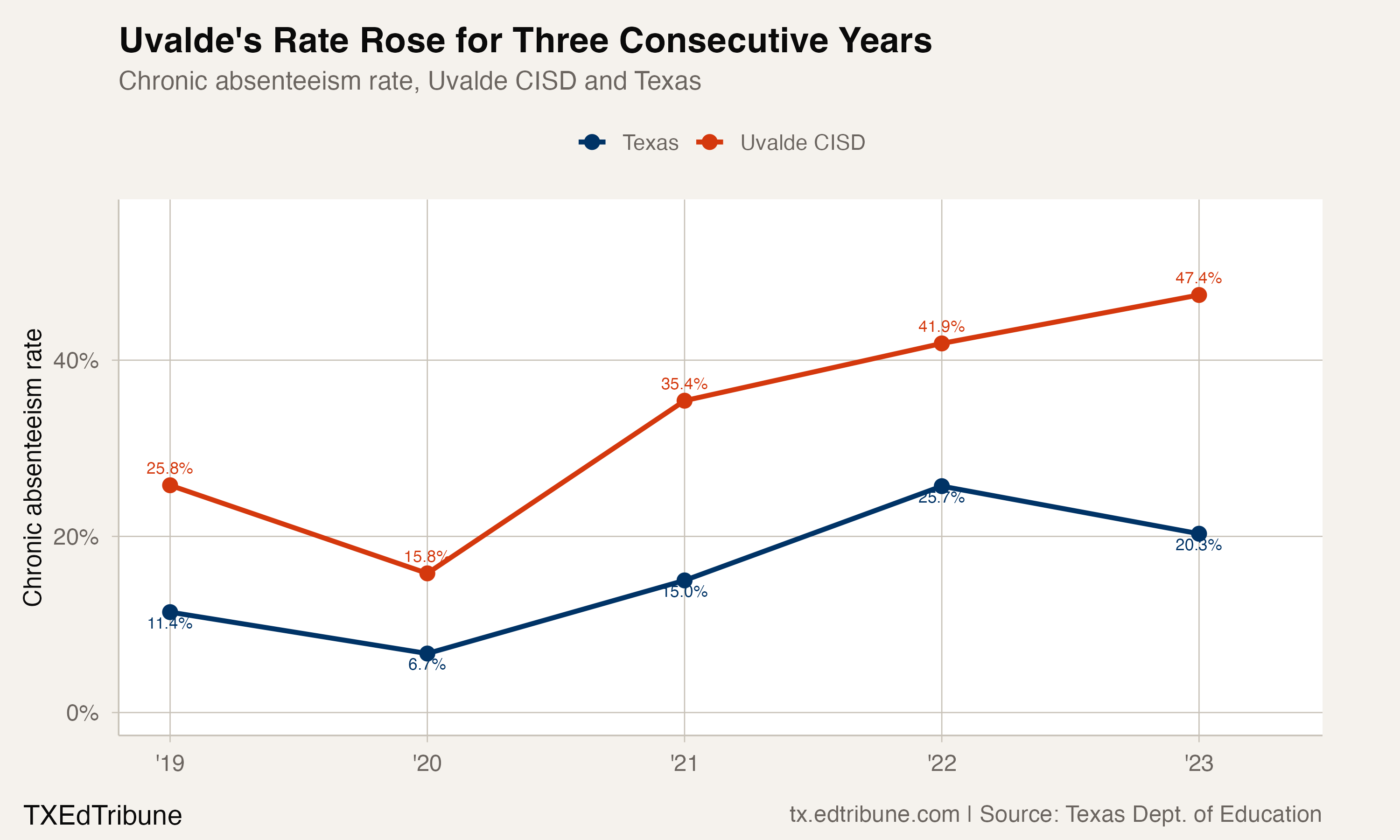
Uvalde CISD's Chronic Absenteeism Reached 47.4% in 2022-23
Uvalde CISD reported 1,731 chronically absent students in 2022-23, producing a rate 27.1 percentage points above the Texas average.
Data-Driven Education Journalism for the Lone Star State
Education News & Data
Local education reporting from every corner of Texas, grounded in Texas Department of Education data.
Texas special education students had a 25.0% chronic-absence rate in 2022-23, down from 31.6% in 2021-22 but above 16.9% in 2018-19. The gap with all students was 4.7 points.
Texas English learners had a chronic absence rate just above the statewide average in 2023, after running below it in 2019 and 2020.
Published district-rate means were 24.4% for Texas charter districts and 16.0% for traditional districts in 2023. The 8.4-point gap sat between a 0.0% and 87.1% charter rate.
Edgewood ISD's chronic absence rate reached 53.6% in 2023 while San Antonio ISD and Texas improved.
Uvalde CISD reported 1,731 chronically absent students in 2022-23, producing a rate 27.1 percentage points above the Texas average.
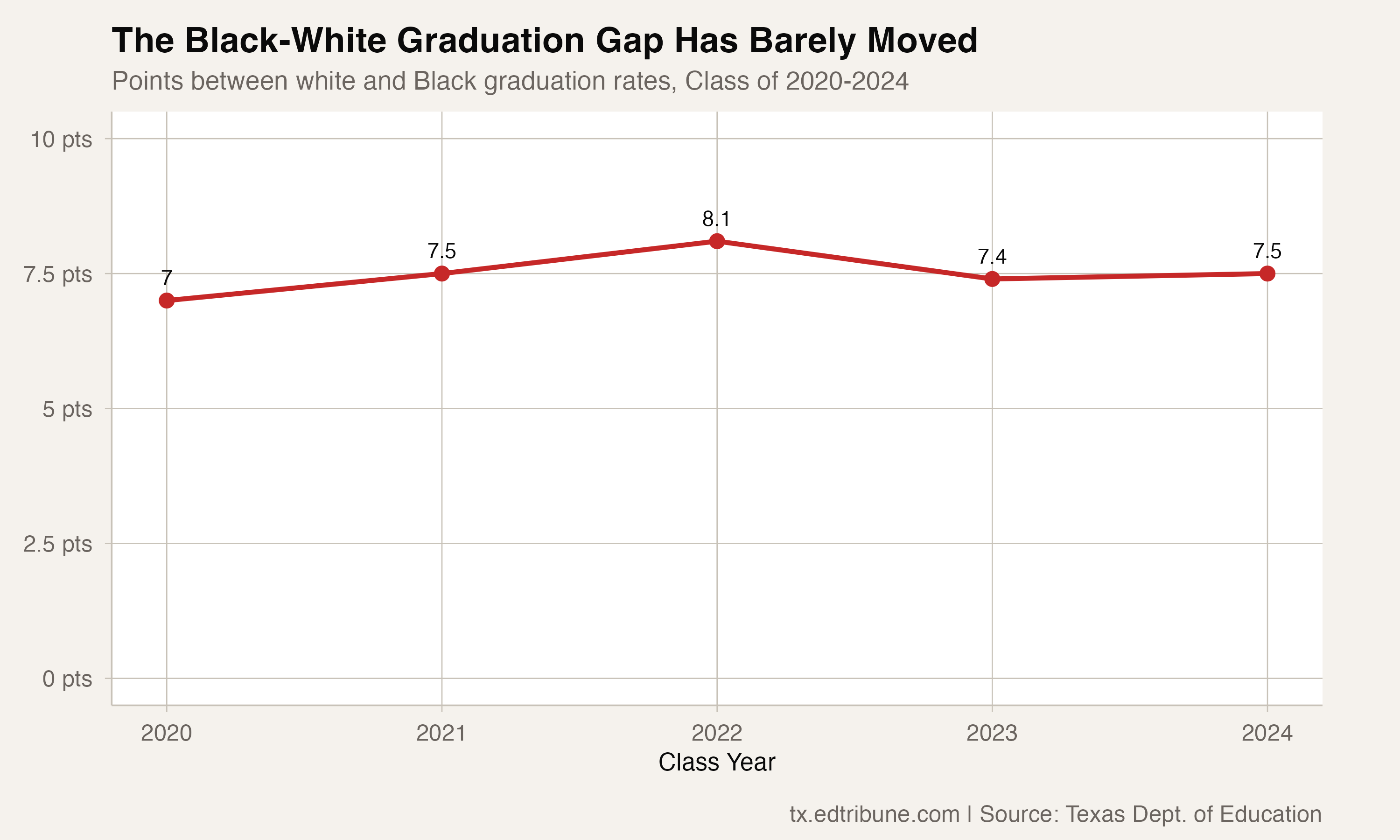
Texas publishes graduation rates for every racial group. Black students graduated at 86.9% in 2024, 7.5 points below white students, a gap that has barely moved in five years.
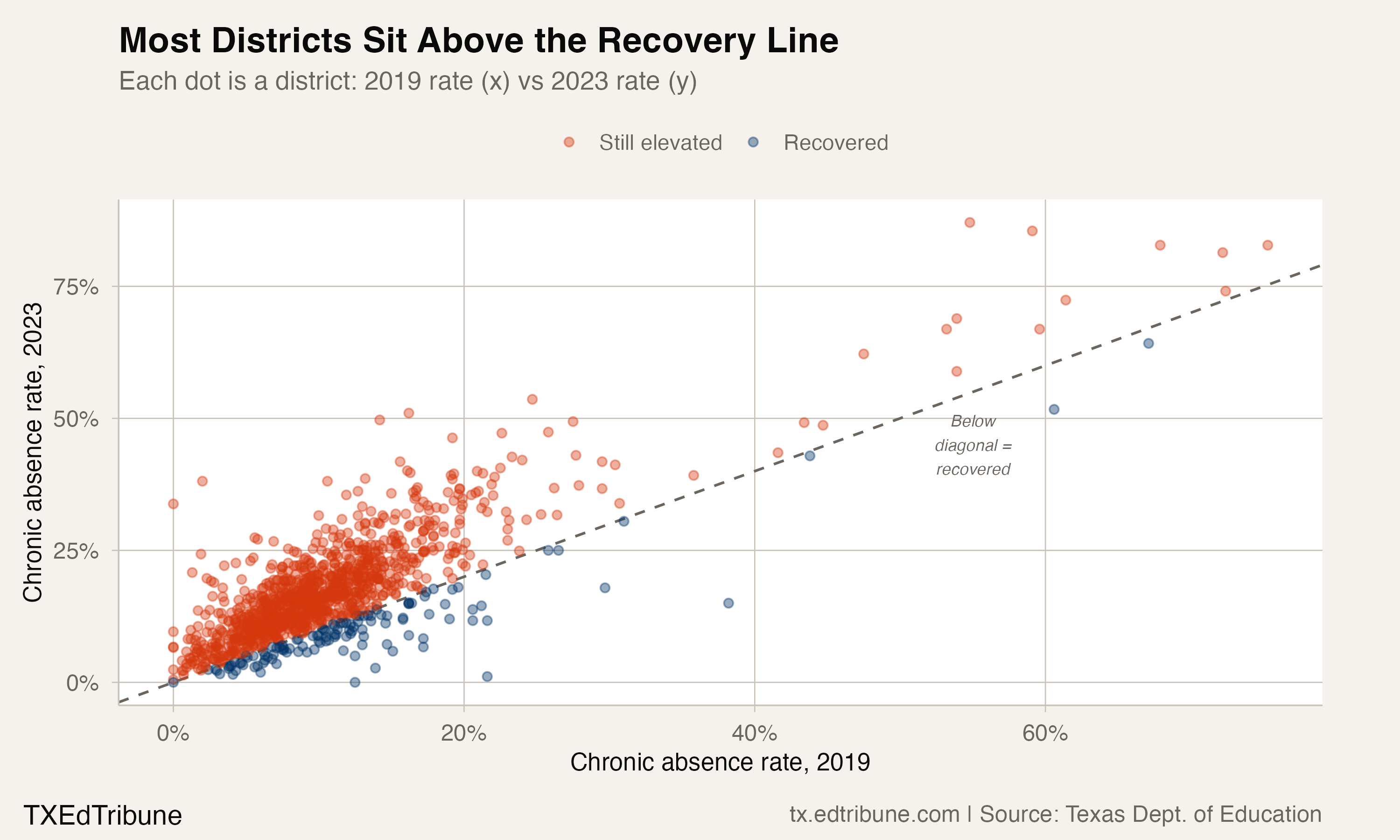
A fixed comparison found 1,066 of 1,187 Texas district-level systems above their 2019 chronic absenteeism rate in 2023.
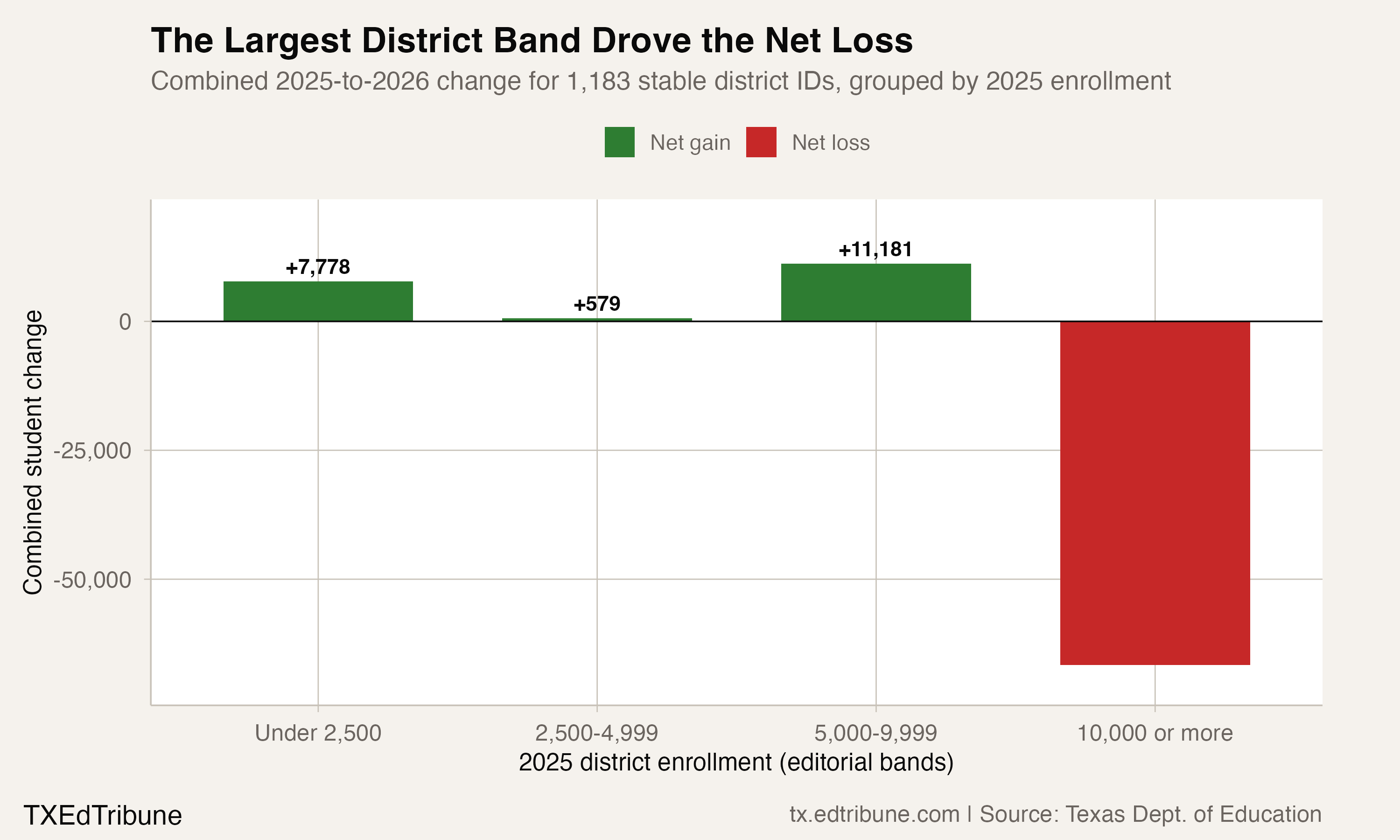
Texas enrollment fell 47,195 in 2026 as stable districts above 10,000 students lost ground while smaller systems gained overall.
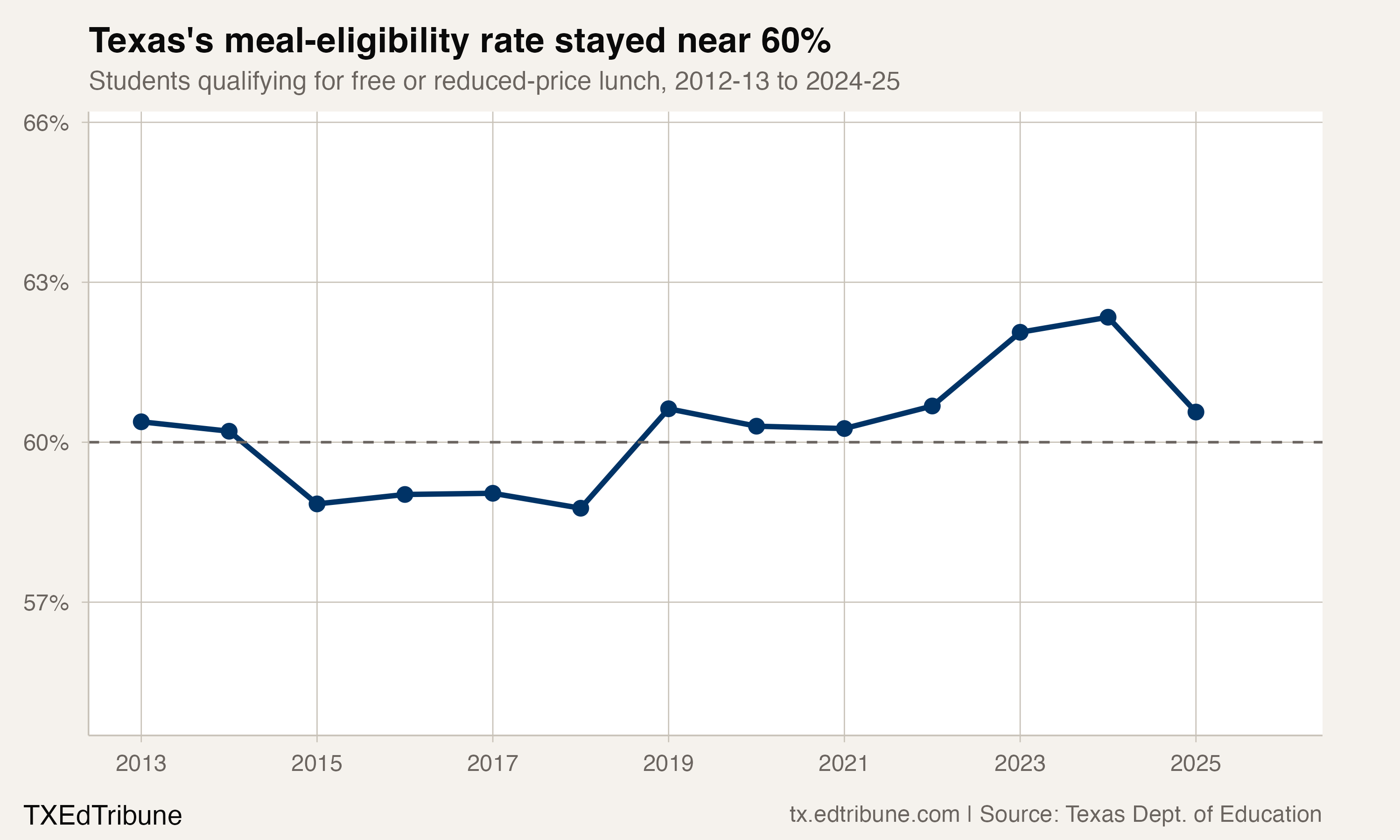
From 2012-13 through 2024-25, Texas's published free/reduced-price lunch rate stayed between 58.8% and 62.3%.
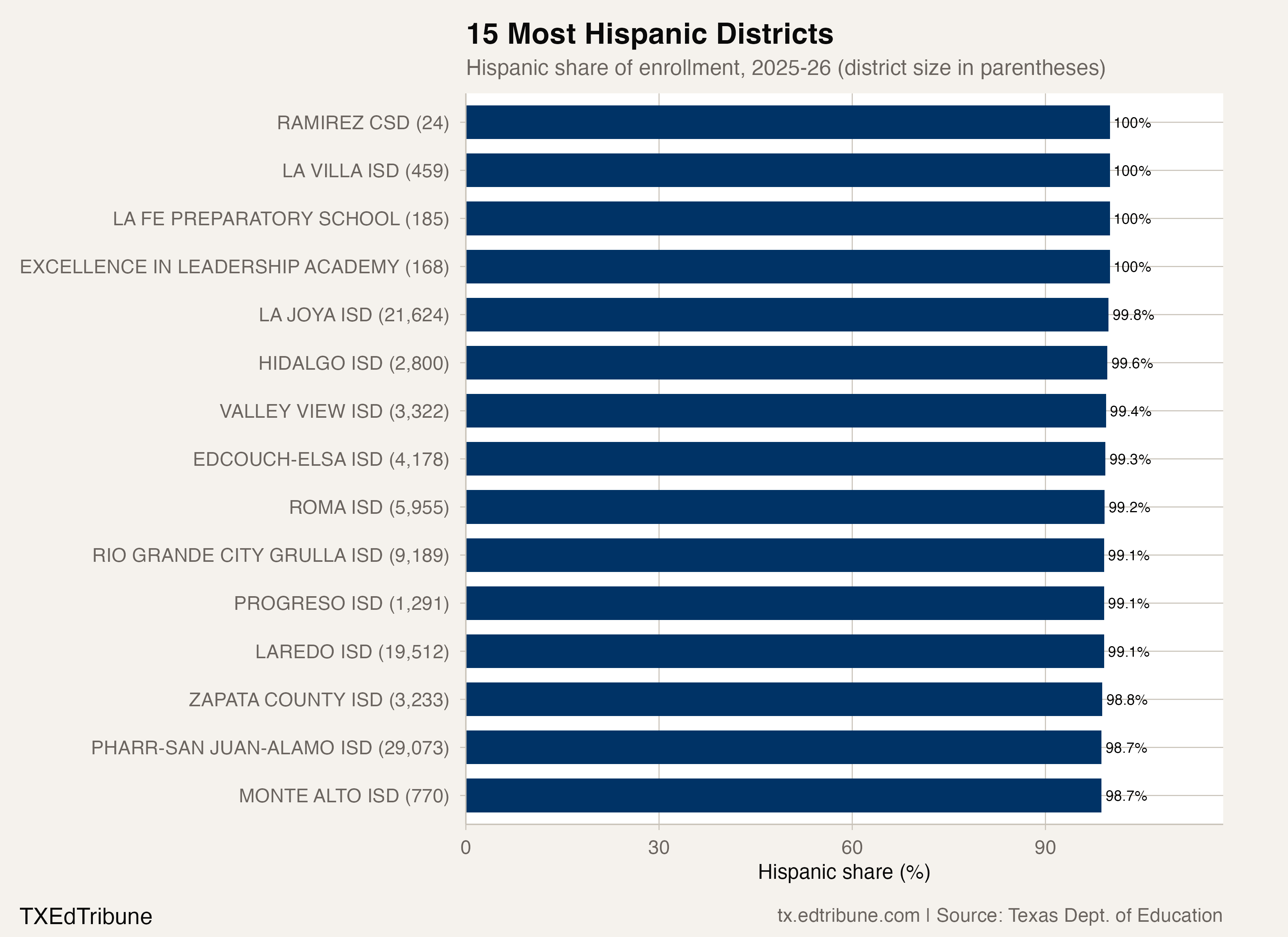
Ninety-four Texas school districts are more than 90% Hispanic, and their enrollment is shrinking while the rest of Texas grows.
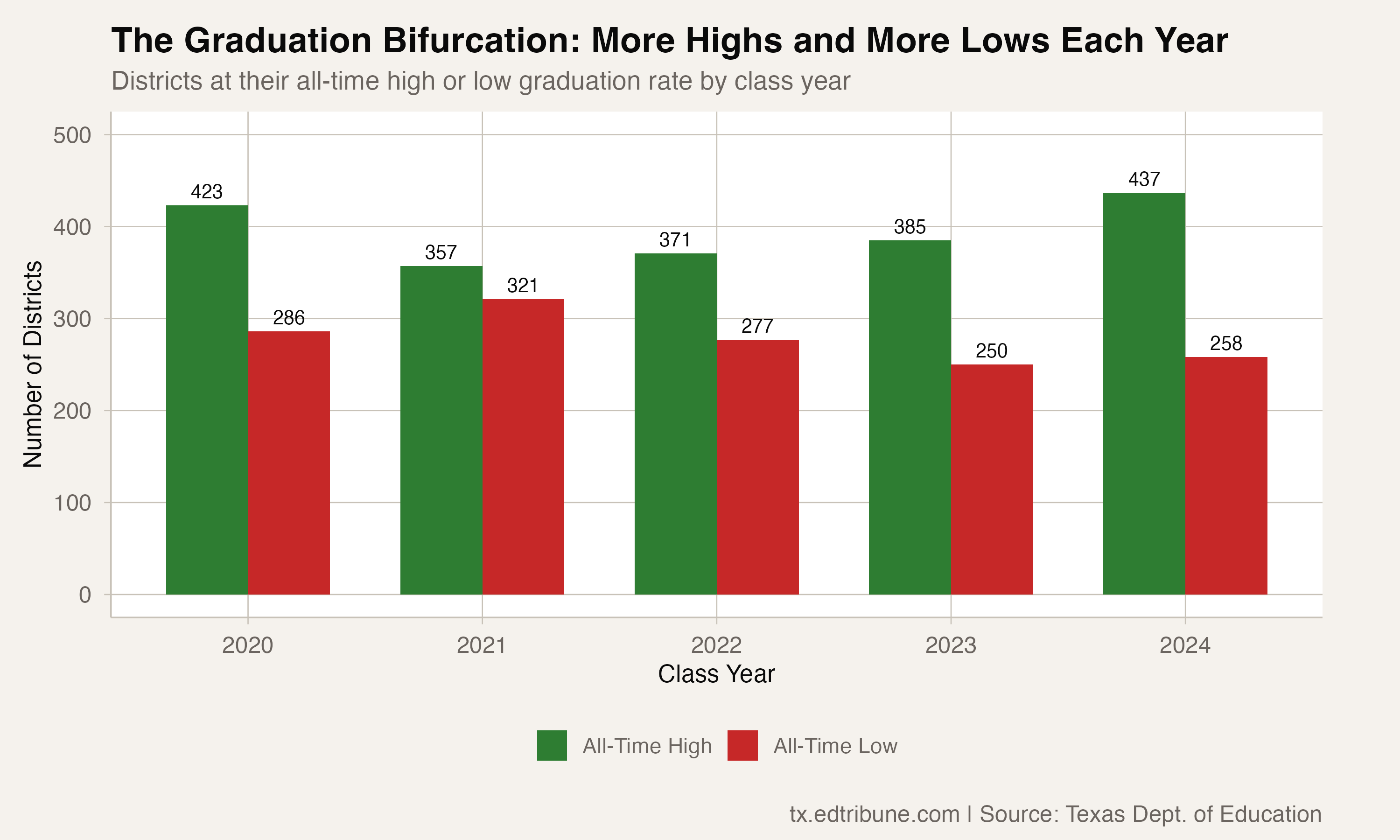
In a fixed five-year Texas panel, 423 districts were at a panel high and 248 at a panel low in 2024; 65 flat-rate districts counted in both groups.
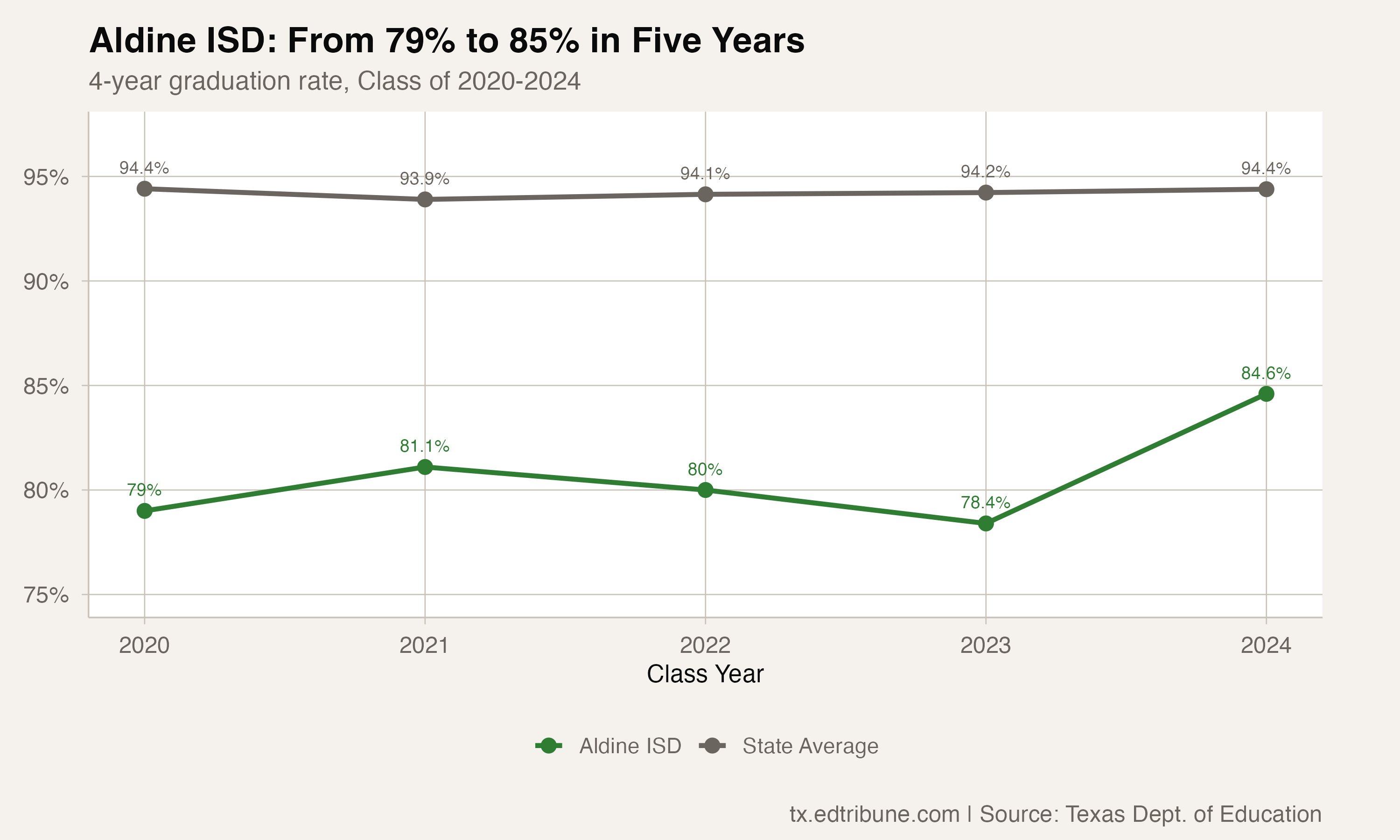
Aldine ISD rebounded 6.2 points in 2024, while Donna ISD completed four consecutive annual graduation-rate increases and reached 96.3%.
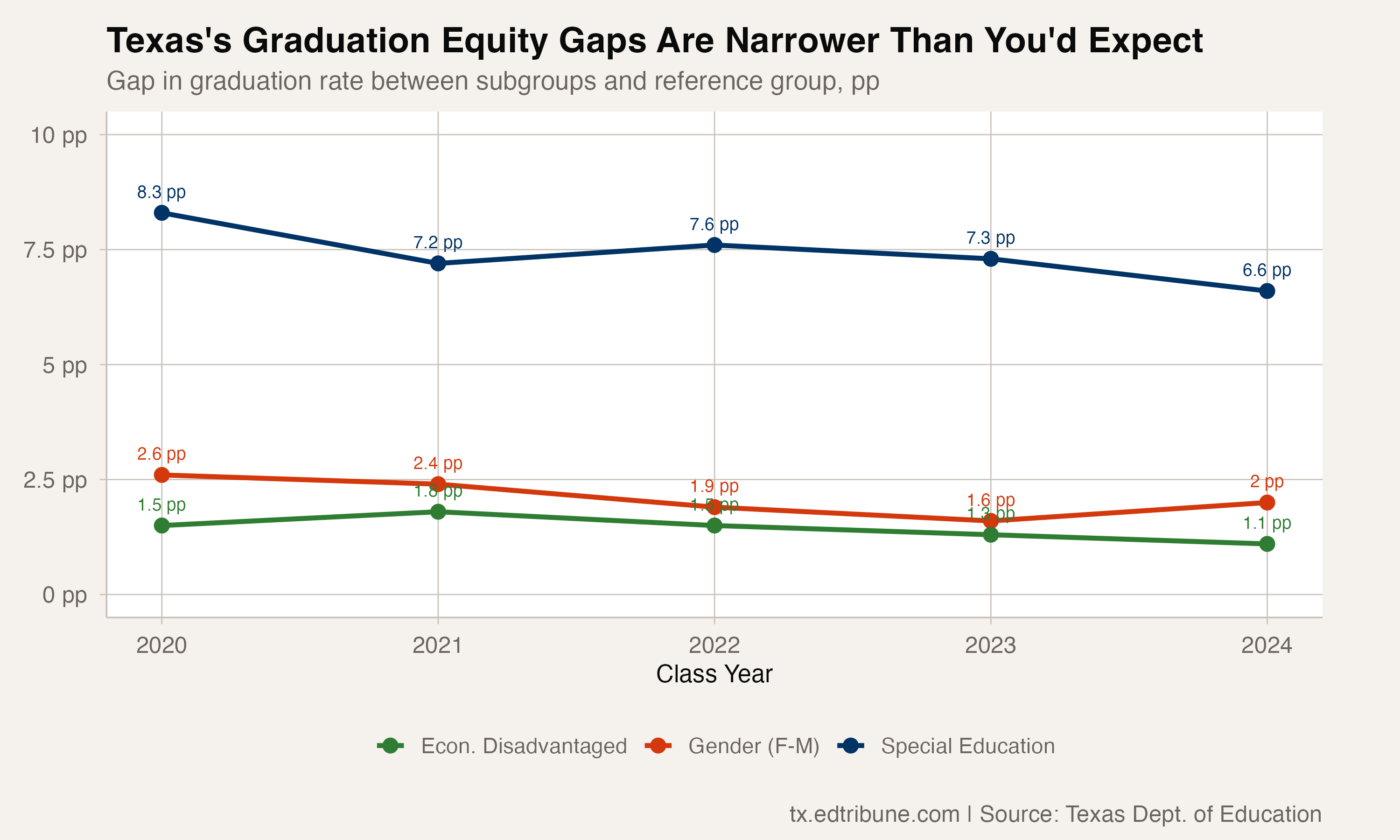
Texas's 2024 graduation gaps vary sharply: 2.5 points for economically disadvantaged students, 9.9 for special education, and 3.2 by gender.
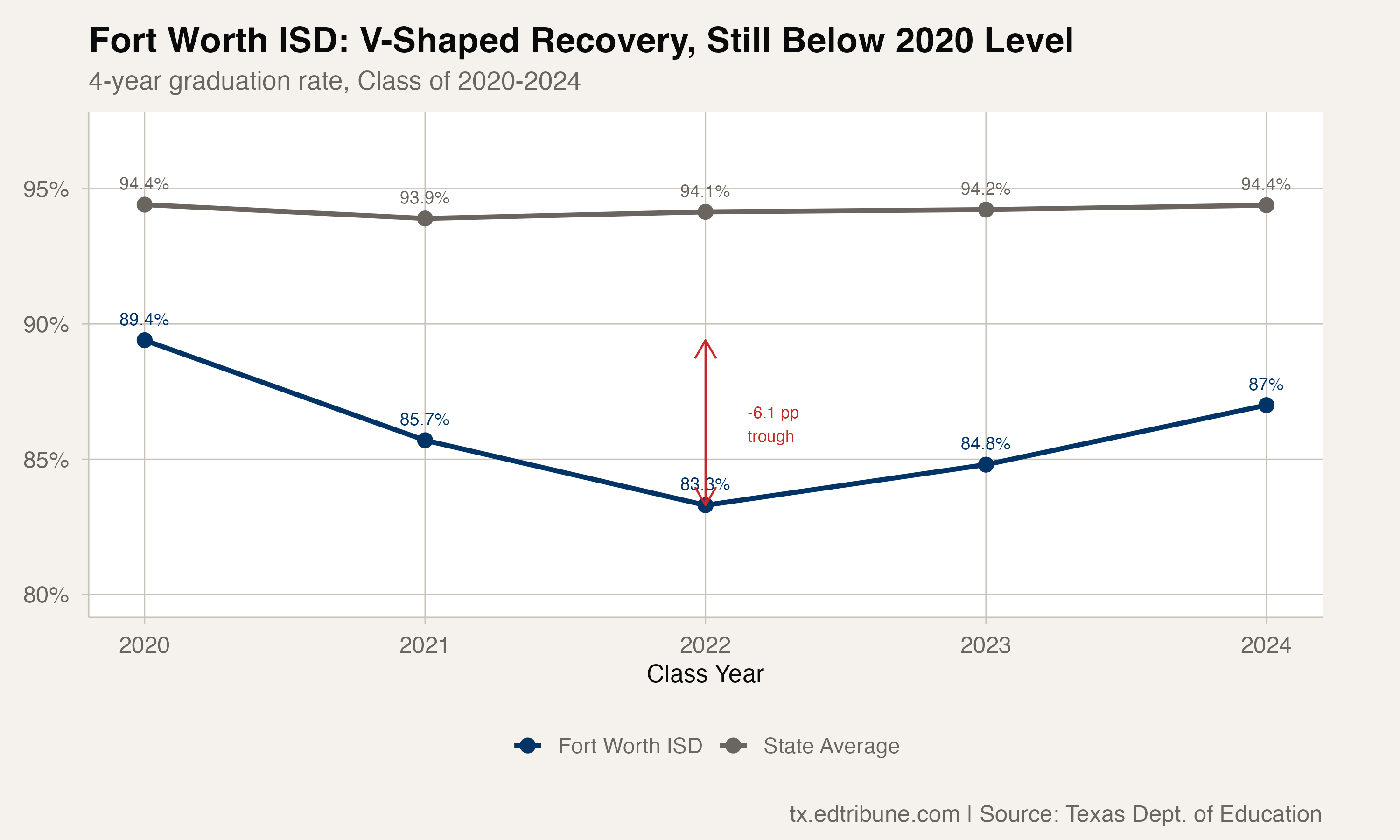
Fort Worth ISD's graduation rate plunged 4.4 points to 81.0% between the classes of 2020 and 2022, then recovered to 82.6% -- but remains 2.8 points below its 2020 level and 8.1 below the state average.
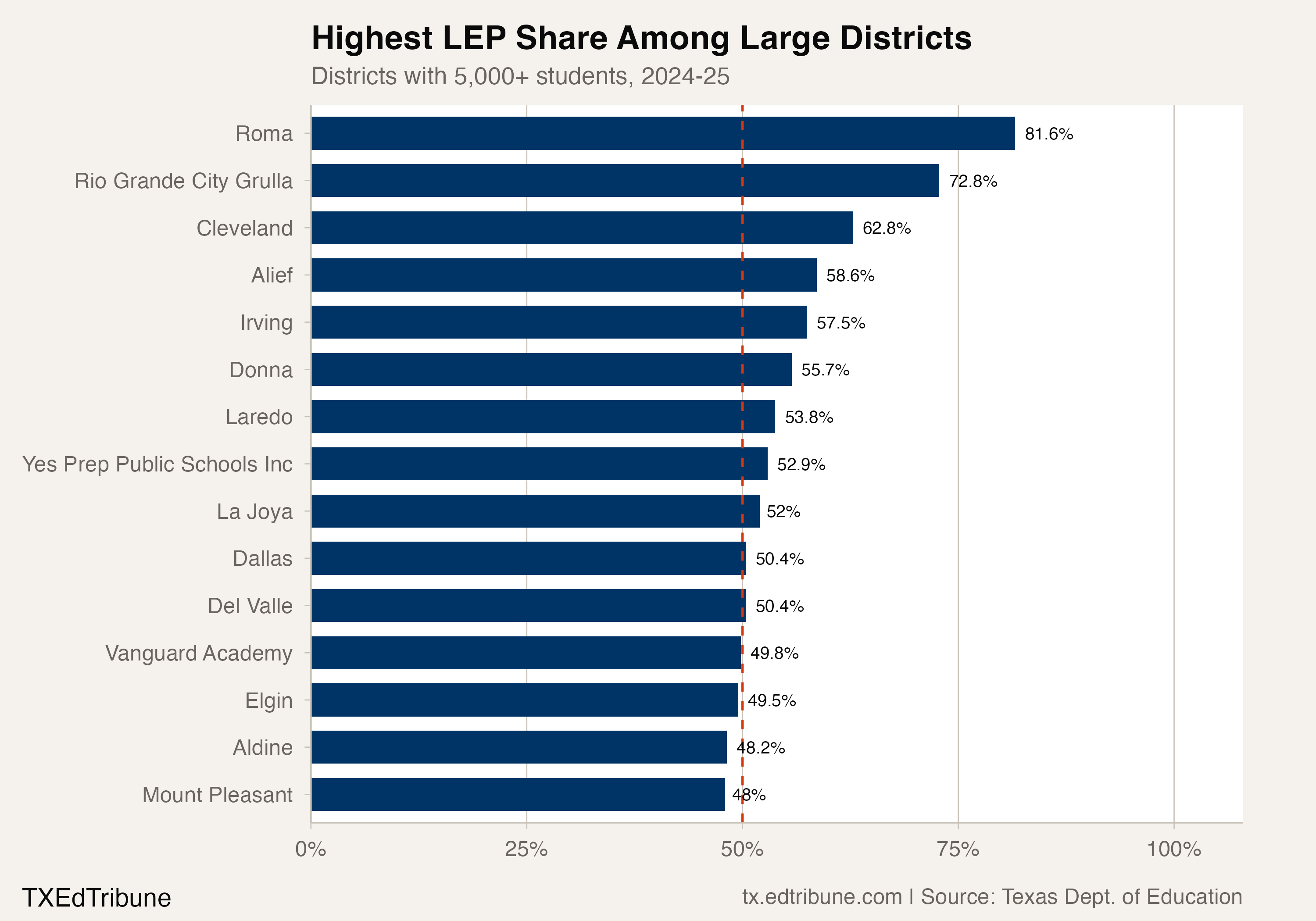
Dallas ISD crossed 50% English learner enrollment in 2024, joining 53 other Texas districts where a majority of students are classified LEP.